
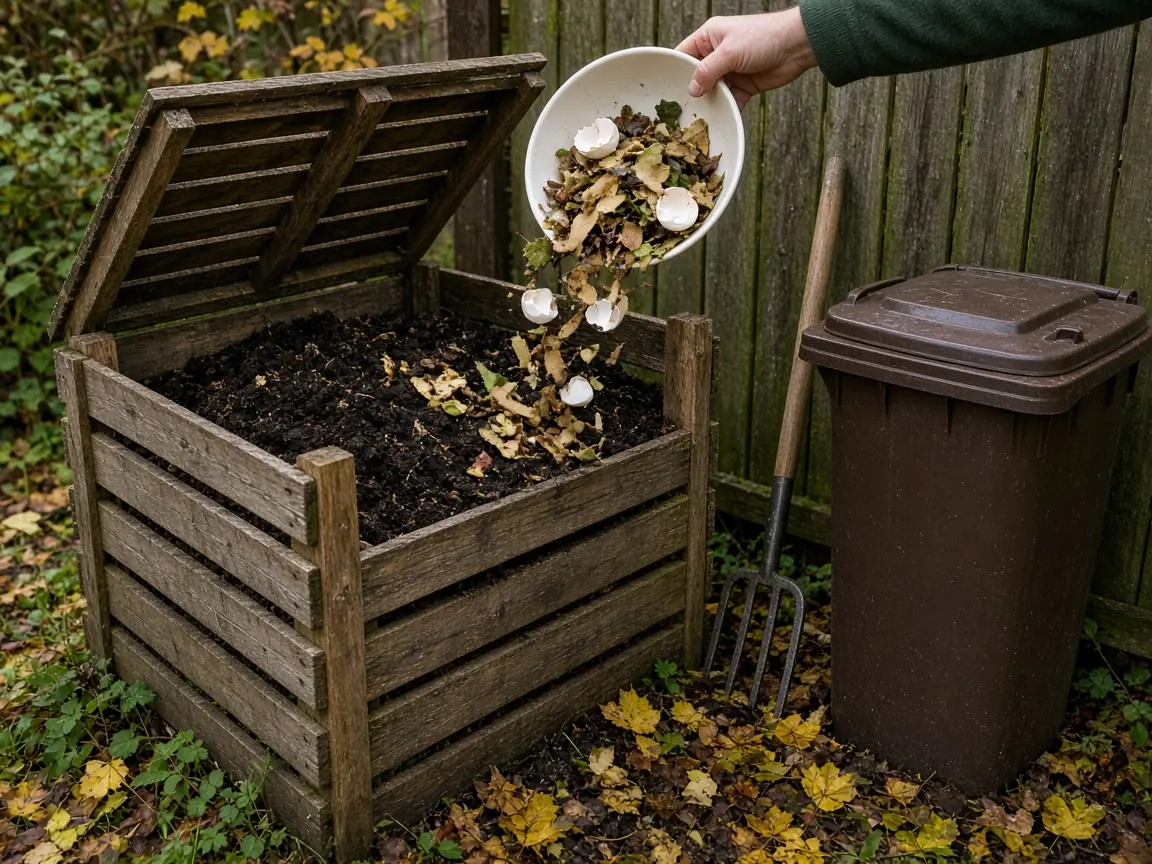
Food scraps guilt you every time they hit trash. Cities offer green bins; neighbors swear by backyard tumblers. Both beat landfill methane when systems work; both fail when bins sit sealed until smell forces action.
Home compost returns soil amendment to your beds if you garden. Apartment dwellers rarely need that output—municipal collection may be the honest choice.
Side-by-side for a typical household
| Factor | Backyard compost | Curbside green bin |
|---|---|---|
| Space needed | Corner of yard or patio bin | Kitchen caddy + curb space |
| Meat and dairy | Usually avoid | Often allowed industrially |
| Pest management | Rodents if poorly managed | Secure lid on pickup day |
| Time weekly | Turning, balancing browns/greens | Rinse caddy, put out bin |
| Winter cold | Slows or pauses | Collection continues |
| End product | Free mulch for garden | Industrial compost elsewhere |
Balance carbon-rich “browns” with nitrogen “greens” in backyard piles. Pure kitchen waste turns slimy; dry leaves and shredded paper rescue beginners.
Green bin rules vary by contractor—plastic stickers, pizza grease, compostable bags. Read the card they mail instead of guessing from another city’s blog.
Combo approach works: bin for meat and winter slumps, pile for summer garden trimmings.
Share surplus compost with community gardens if you produce more than beds need.
Smell means something is off—too wet, not enough air, or meat where it should not be. Fix process before neighbors complain.
Organics recycling is habit engineering. The virtuous system is the one emptied every week without heroics.