

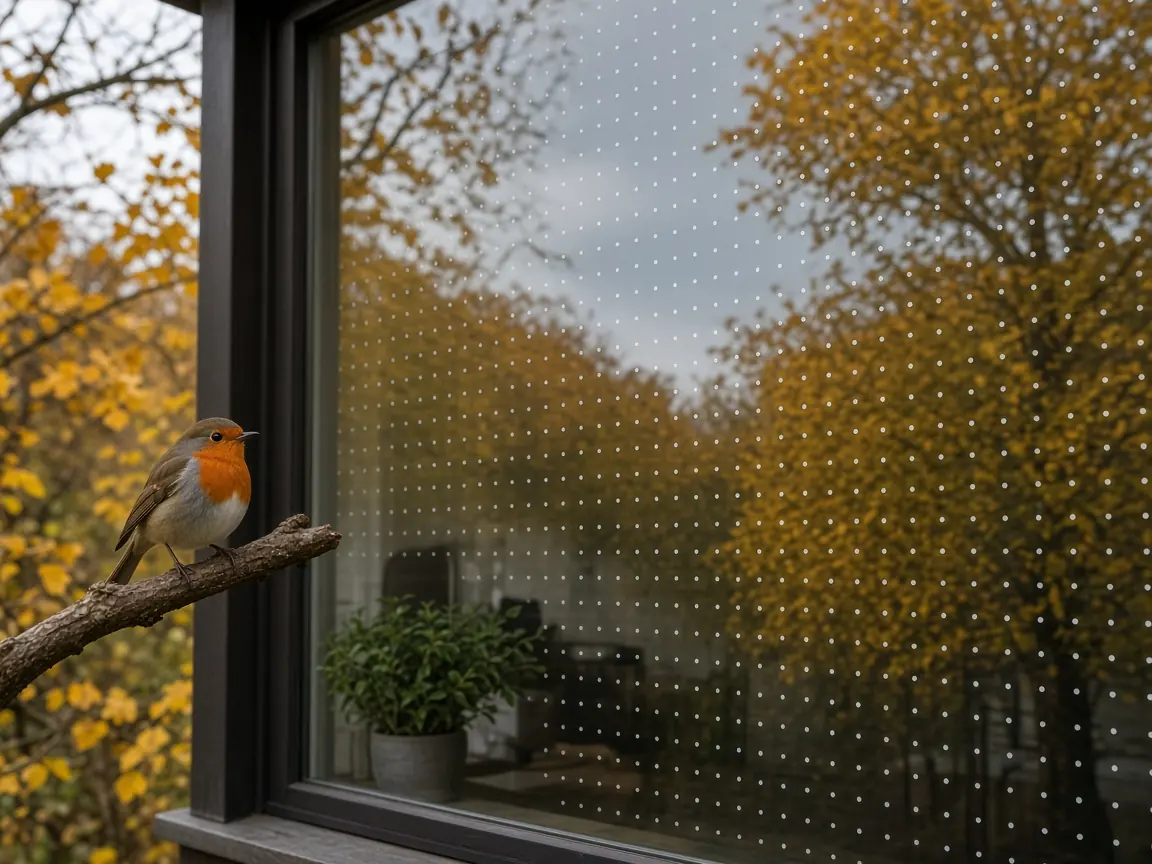
The thump at the bedroom window is quiet and awful. Sometimes the bird flies off stunned; sometimes it does not. Glass is invisible architecture to species that navigate by open air and reflected trees.
Migration weeks increase traffic past buildings they never evolved to read. Urban lights and canyon-like facades add confusion. Home balconies participate even when skyscrapers dominate headlines.
What actually reduces hits
External screens or netting create a physical buffer—best when mounted slightly proud of the glass so impact happens before the pane.
Pattern film with markers separated by roughly two inches or less on the outside surface. One hawk silhouette in the center leaves most of the window lethal.
Closing curtains helps humans see less reflection; birds still hit transparent areas unless the exterior pattern breaks reflectivity.
Move feeders within three feet of glass or far beyond thirty feet. The middle zone encourages speed into reflection.
Seasonal and building notes
Clean glass after storms—water films change reflectivity and surprise residents who thought they were fine last month.
Corner windows that show through to another window create tunnel illusions. Break sight lines with hanging plants outside, not only indoors.
At night, draw down shades where indoor light spills out during migration in lit cities.
Document strikes if your city tracks them; data pushes retrofits in condos more than one sad anecdote.
Landlords may approve removable film more than structural changes. Lead with low-cost trials on the worst pane.
Feeding birds and protecting them from glass belong together. A feeder that draws life to a invisible wall needs the same care as seed choice.


