
Here is an unpopular opinion: for most people, a standing desk is a purchase made out of guilt. Somebody reads that sitting is bad, somebody else posts a tidy desk photo, and three weeks later there is a motorised frame in the corner that nobody has raised since the first weekend.
That isn't an argument against them. Some people use theirs every day and would never go back. The interesting question is what separates those people from everyone else.
What the desk actually changes
I'll skip the health promises. The research on standing versus sitting is mixed, and nobody can honestly tell you a particular desk will fix your back. What the desk does give you is a way to change position without leaving your work. That's all. Some find it useful, some find it irrelevant.
People who keep using them tend to share one habit: they have a trigger. The desk goes up after lunch, or during calls, or when they read documents. People without a trigger end up leaving it in one position for months.
Three ways to get one
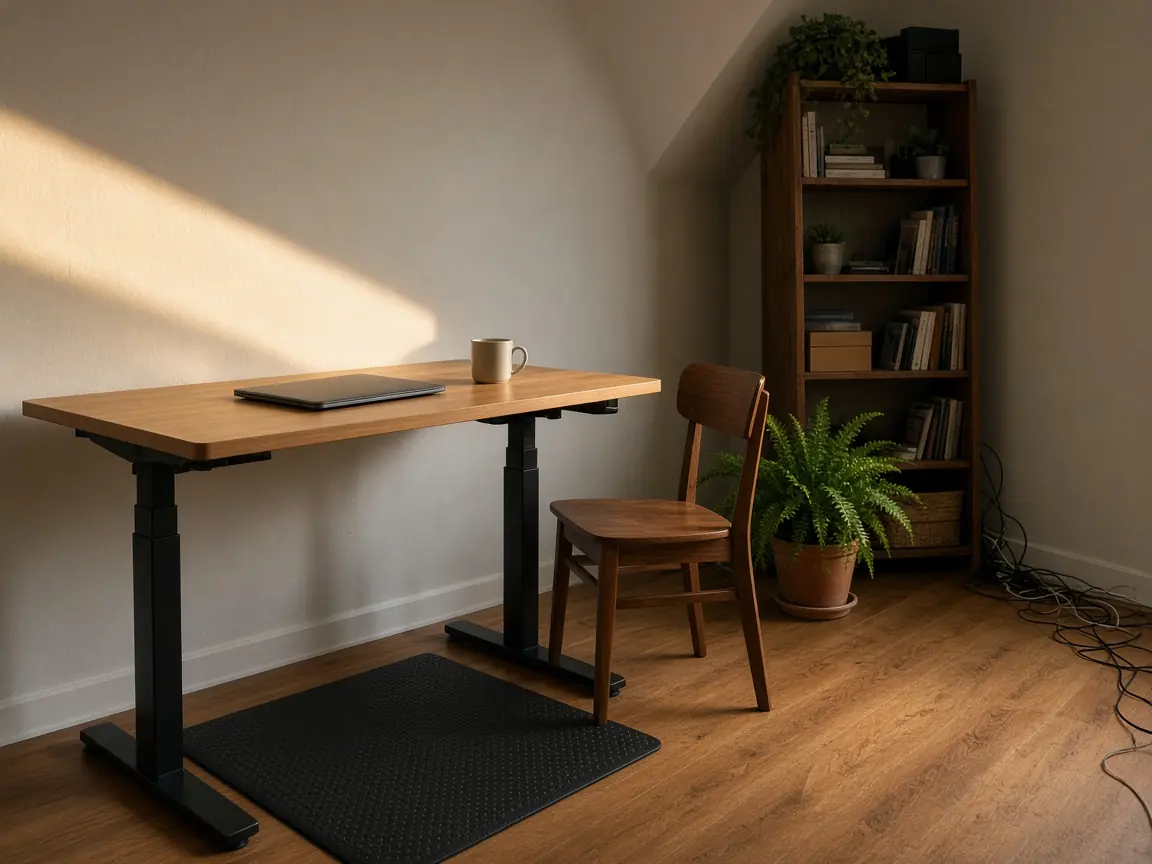
A full electric desk is the premium option. Smooth, stable, with memory presets, and it costs several hundred. The frame is heavy, it needs a power socket, and moving flats means a bad afternoon.
A desktop converter sits on top of your existing desk and lifts the monitor and keyboard. It is cheaper and you can try it without replacing furniture. The downside is that the keyboard surface often ends up too high or too small, and the whole thing wobbles a bit if you type hard.
The third route costs nothing: a high counter, a shelf or a stack of sturdy boxes for an hour of standing work. It looks silly, but it will tell you quickly whether you'd use the real thing.
| Option | Rough cost | Space | Best for |
|---|---|---|---|
| Electric sit-stand desk | High | Needs a full desk footprint | Daily users with a permanent room |
| Desktop converter | Medium | Uses your current desk | Renters, people testing the idea |
| Improvised high surface | Close to zero | Whatever you have | Trial run before buying |
| Keep sitting, set a timer to walk | Zero | None | Small flats |
That last row is not a joke. In a studio apartment, a good chair and a habit of getting up every forty minutes can do more than a desk you stand at twice a week.
Things nobody mentions in the reviews
Standing for hours in socks on a hard floor gets uncomfortable fast. A thick mat helps, and so does changing position, which is more or less the point of the desk anyway.
Screen height matters more than desk height. If the monitor sits too low you'll hunch whether you stand or sit. A cheap laptop stand with a separate keyboard fixes this for a fraction of the price.
Cable length. Raise a desk fully and find out which cable was too short. It's always the monitor cable, always at the worst moment.
If I were buying for myself in a rented flat, I'd try the box-stack version for two weeks first, then a converter, and only then think about a full frame. And if the two weeks showed I never stood, I'd be glad I didn't spend the money.