The most common rain barrel mistake is treating it as a decorative object. Someone buys a nice barrel, puts it under a downspout, and walks away. Three weeks later it is full of mosquito larvae, the base has sunk into the lawn, and the overflow is flooding the wall of the house.
A barrel is simple, but it's still plumbing. A few details decide whether it works for years or becomes a bin you eventually drag to the dump.
Mistake one: no screen
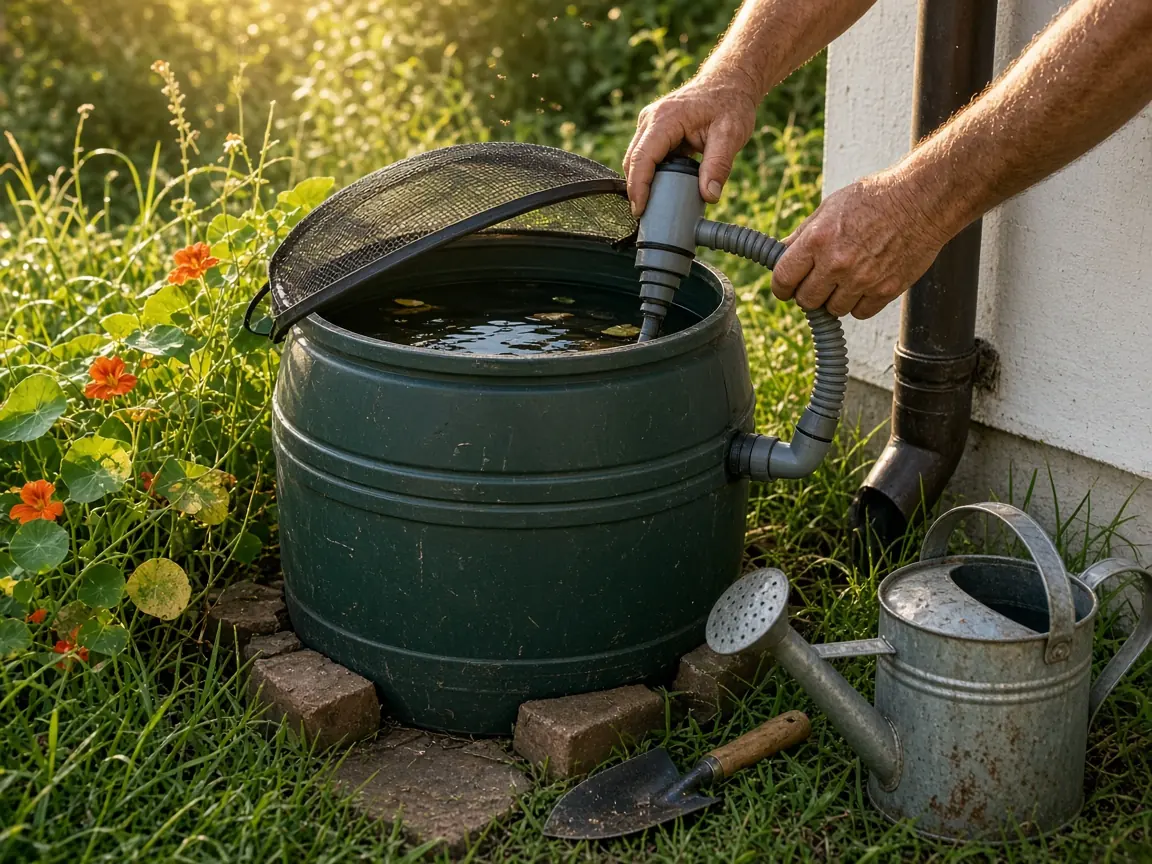
Still water, warm weather and an open lid make perfect conditions for mosquitoes. Every barrel needs fine mesh over the inlet and any other opening. Window screen material works, as long as it's fixed firmly and has no gaps around the edge.
If a barrel already has larvae, don't dump it on the lawn. Strain them out, or use a product sold for the purpose; ask at a garden centre.
Mistake two: no plan for overflow
A single downpour can fill a standard barrel in minutes. After that, the water goes wherever the downspout sends it. If that's against your foundation, you have created the problem you were trying to solve.
Fit an overflow hose or pipe near the top and aim it away from the house, toward a flower bed or a rain garden. Better still, link two barrels together.
Mistake three: bad base
Water is heavy. A 200-litre barrel weighs about 200 kilograms when full. A wobbly stack of bricks on soft soil won't hold it. Use a level, solid base such as paving slabs or a proper stand. A raised barrel also gives gravity more pressure for filling watering cans or running a hose.
Mistake four: expecting it to be clean
Roof water picks up bird droppings, dust and residue from roofing materials. It's fine for ornamental plants and for watering soil around vegetables, but I wouldn't use it for drinking, and I'd keep it off the leaves of salad crops. A simple filter or a first-flush diverter, which sends the dirtiest initial water away, improves things.
Light is another problem. A clear or light-coloured barrel in the sun grows algae. Dark and opaque is better.
Mistake five: forgetting winter
Freezing water expands and can crack a full barrel. In cold climates, drain it in autumn, disconnect it from the downspout, and tip it over or store it indoors. Leave the tap open so rain can't fill it again.
Also check local rules. In some places, there are limits on the number or size of barrels, and some areas actively encourage them with discounts. A quick search or a call to your water company will tell you.
| Item | Done? |
|---|---|
| Fine mesh on every opening | Before first rain |
| Overflow routed away from the house | Before first rain |
| Level, solid base | Before filling |
| Dark, opaque barrel | When buying |
| Tap at a useful height | When setting up |
| Autumn drain-down plan | Before first frost |
| Local rules checked | Before buying |
It's a modest project, and when it works it feels disproportionately satisfying. You water the garden with water that fell on your own roof, and for that to happen you only need to get five dull details right.