
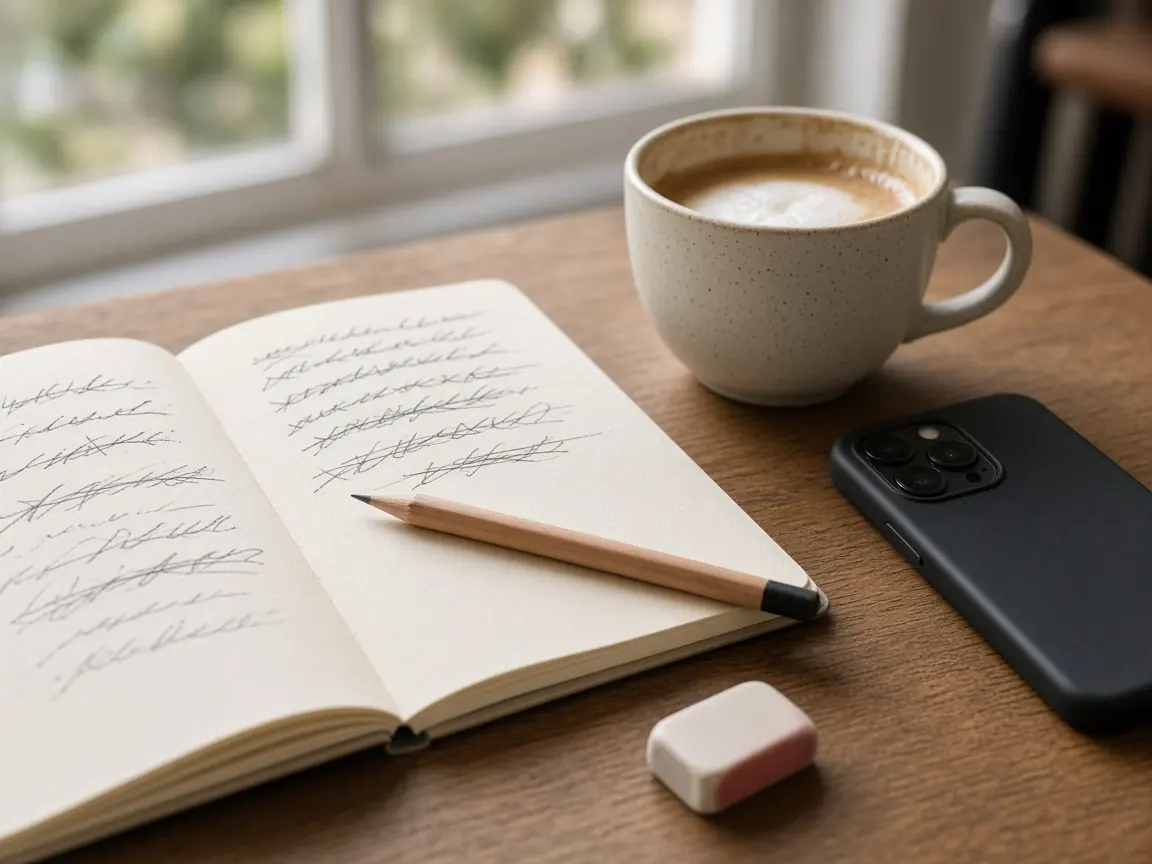
Planning tools fail for boring reasons: too many taps, no joy, or a notebook that never leaves the desk drawer. The paper-versus-app debate is not about virtue. It is about which friction matches how you live.
Apps shine when your life moves by notifications. Shared calendars, location reminders, and search across years of notes save people who juggle shifts, school pickups, and freelance deadlines. The phone is already in your hand; adding an event takes seconds if you trust the system.
Paper wins when you need spatial memory. Skimming a week spread, circling a date, or drawing arrows between tasks uses motor memory that some people retain better than a scrolling list. There is also no badge count daring you to open social media “just while you are here.”
Where each tool breaks down
Apps break when every plan becomes a notification forest. If everything pings, nothing feels urgent. Paper breaks when you forget the book at home and your week lives only in your head.
Hybrid users often carry the worst of both worlds—duplicate entries, missed sync, guilt over empty pages. Picking a primary home for dates and a secondary for notes usually calms that chaos.
| Factor | Paper planner | Planning app |
|---|---|---|
| Setup cost | Notebook + pen yearly | Free tier or subscription |
| Reminders | You must look at it | Automatic alerts |
| Distraction risk | Low | High if same device has feeds |
| Sharing | Photo or rewrite | Instant shared calendars |
| Archive search | Flip pages | Keywords across years |
| Battery / access | Always on | Needs charge and signal |
Cost surprises people. A nice planner is cheap compared with a premium app over five years—but only if you fill it. An unused app subscription is a quieter leak.
Privacy sits in the middle too. Paper stays in your bag unless someone reads it. Cloud calendars are encrypted and convenient, yet they are still someone else’s server. For some households that matters; for others, shared visibility beats secrecy.
Who tends toward which
Visual planners who doodle margins often keep paper for the week view and use a phone calendar for hard appointments only. People in rotating teams usually need app sharing—paper cannot ping a colleague when a meeting moves.
Students split by subject load: paper for lecture capture, app for exam dates. Retirees often return to paper for the tactile pleasure after decades of Outlook.
Try a two-week experiment instead of a year-long purchase. One week paper-only for tasks, one week app-only, same types of entries. Notice where you lied to yourself about “I will check later.”
The goal is not the prettiest spread or the cleverest widget. It is a system you open without resentment. Whichever format you open twice a day without prompting is the one that sticks.