When streaming buffers in the same room as the router, people blame the provider first. Sometimes that is fair. Often the network inside the house is fighting itself: one box in a corner, thick walls, and a phone clinging to a far band because the name looks familiar.
Wi‑Fi is radio. It bounces, absorbs, and competes with neighbors. Treating it like invisible Ethernet leads to frustration. A few setup mistakes repeat in apartment blocks and suburban homes alike.
Mistakes worth fixing first
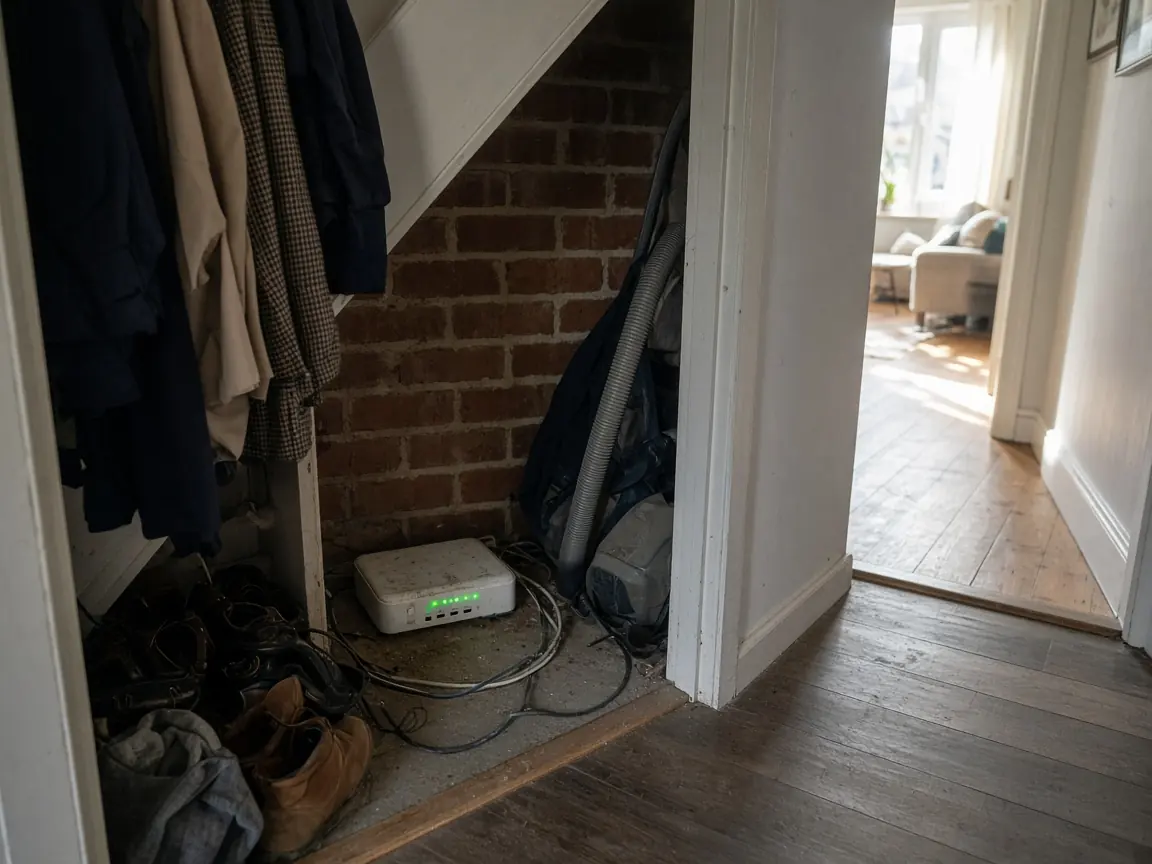
Hiding the router inside a TV cabinet looks tidy and eats signal. Metal, glass, and dense wood matter. Central elevation beats aesthetic concealment almost every time.
Using the default network name is not a security disaster by itself, but leaving default admin passwords on the router absolutely is. Change admin access before you tweak anything else.
Assuming “more bars” equals speed. Phones may connect on a 2.4 GHz band that reaches far but crawls for large downloads. Dual-band routers need intentional naming or band steering so devices pick sensibly.
| Symptom | Likely cause | First move |
|---|---|---|
| Good speed wired, bad on Wi‑Fi | Placement or band | Move router, test 5 GHz nearby |
| Random drops at night | Neighbor congestion | Change channel width / channel |
| One room only fails | Wall material | One wired access point, not three repeaters |
| New phone slow, old fine | Old security mode | Update firmware, use WPA2/WPA3 mix |
Repeater chains feel cheap and often double latency. A single wired access point or a modest mesh with Ethernet backhaul usually beats three wireless extenders in a daisy chain.
Firmware updates matter. Router makers patch bugs quietly. Schedule a reboot after updates; stale uptime is not a badge of honor when memory leaks exist.
Guest networks are useful isolation, not just hospitality. Smart home gadgets with weak security belong off your main LAN when the router supports VLAN-style separation.
Speed tests from a phone in the bathroom prove drama, not capacity. Test near the router on a laptop, then at trouble spots after each change. One variable at a time beats random channel hopping.
When nothing helps, map the house with a simple walk test and note materials—mirrors, metal ducts, fish tanks. Physics wins arguments with marketing brochures.